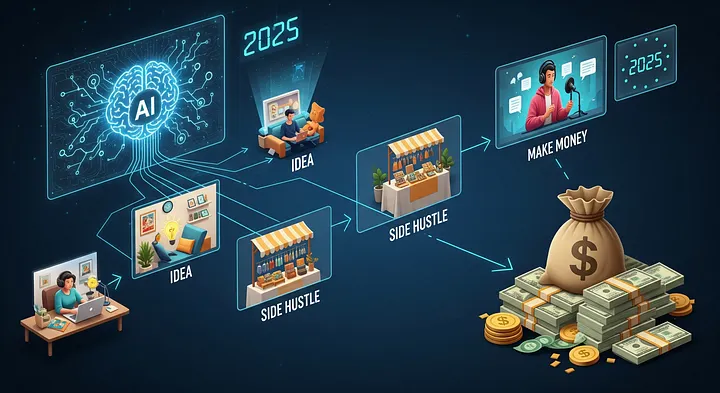
Failing Fast with AI: How Smart Experiments Drive Innovation in 2025
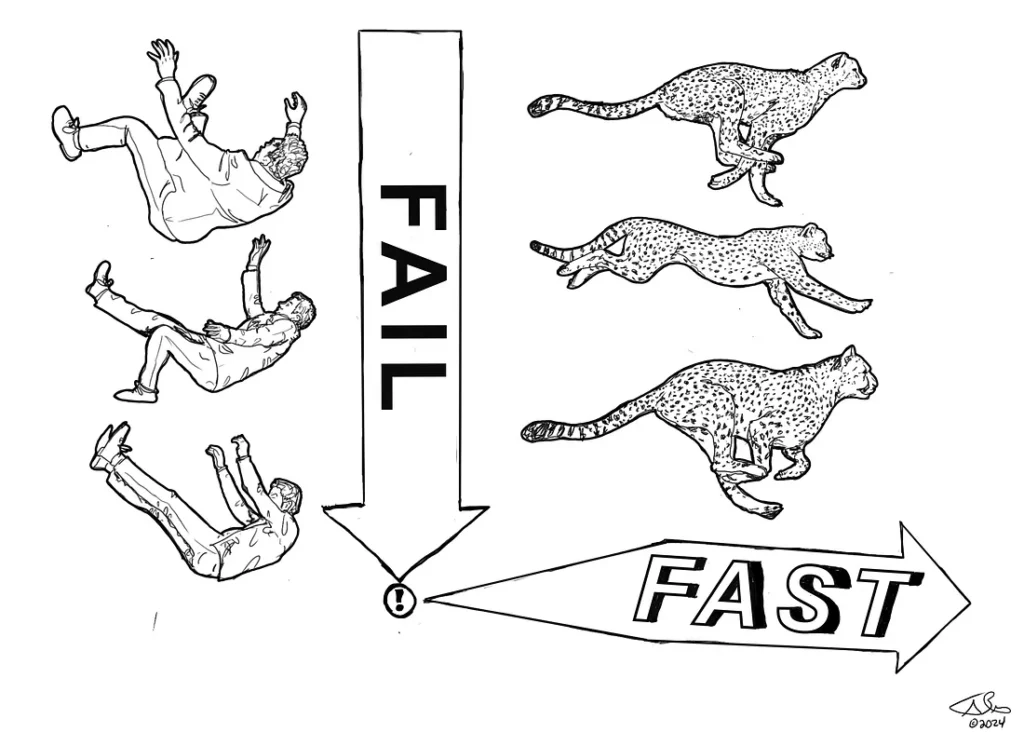
We’ve all heard it — failure is part of success. But in the world of Artificial Intelligence, it’s not just a cliché — it’s a strategy.
In 2025, the businesses and creators leading the AI revolution aren’t the ones who get everything right the first time. They’re the ones who fail fast, learn faster, and adapt intelligently.
That’s the essence of Failing Fast with AI.
What “Failing Fast with AI” Really Means
At its core, Failing Fast with AI means running small, rapid experiments using AI tools and learning from the results in real time.
Instead of spending months building a perfect product, you build a minimum viable model (MVM) — test it, gather data, and adjust.
This agile mindset allows teams to pivot before wasting time, money, and energy on ideas that don’t work.
In short, you let AI help you fail smarter.
Why Failing Fast Matters More Than Ever
The speed of innovation today is exponential. New AI models, APIs, and frameworks appear every week.
Companies that wait too long to validate ideas get left behind. But those who adopt the Fail Fast with AI mindset stay ahead by:
- Reducing risk with small, low-cost experiments
- Learning continuously through quick feedback loops
- Innovating faster with AI-driven iteration
For example, startups using AI prototyping tools like ChatGPT, Claude, or Hugging Face Spaces can now build and test product concepts in days — not months.
Traditional Development vs. Failing Fast with AI
| Traditional Method | Failing Fast with AI |
| Long planning cycles | Rapid prototyping |
| Manual data analysis | Automated AI insights |
| Fear of mistakes | Learning through iteration |
| Limited scalability | Continuous, AI-driven optimization |
The old model valued perfection before launch. The new AI model values iteration before perfection.
That’s the difference between stagnation and innovation.
Real-World Examples of Failing Fast with AI
1. Startups Testing AI-Powered MVPs
AI-first startups now use generative AI to test demand for new apps or services. Instead of coding an entire product, they launch a chatbot prototype, collect user feedback, and refine their concept — often within a single week.
2. Marketing Teams Running AI Experiments
Digital marketers use AI to A/B test ad campaigns, email subject lines, and website designs. When something flops, AI quickly identifies why and suggests improvements — saving weeks of manual analysis.
3. Enterprises Accelerating R&D
Big players like Google, Tesla, and OpenAI use AI-driven simulations to test thousands of hypotheses daily. The goal isn’t to avoid failure — it’s to fail thousands of times virtually, so real-world success happens faster.
How to Apply “Failing Fast with AI” in Your Workflow
Here’s how you can bring this mindset to life:
🔹 1. Start Small — Automate One Process
Pick a repetitive task and let AI handle it. Whether it’s customer replies, scheduling, or report generation — observe results, tweak, repeat.
🔹 2. Use AI to Test Ideas Before Building
Tools like ChatGPT, Midjourney, or Notion AI can simulate user feedback or mock-up designs before you spend a dollar on development.
🔹 3. Measure and Iterate Quickly
Use analytics dashboards or AI-based A/B testing tools to track outcomes. The faster you get data, the faster you can act on it.
🔹 4. Embrace Imperfection
The purpose of failing fast isn’t to get it right instantly — it’s to uncover what doesn’t work so you can find what does.
As entrepreneur Eric Ries (author of The Lean Startup) says:
“The only way to win is to learn faster than anyone else.”
Benefits of Failing Fast with AI
- Faster innovation: Short feedback cycles accelerate discovery.
- Lower costs: You waste less time on dead-end ideas.
- Smarter teams: Every failure adds data and insight.
- Competitive edge: Early experimentation builds long-term resilience.
By combining AI tools with agile thinking, you create an unstoppable feedback loop — learn, improve, repeat.
The Human Side of AI Experimentation
AI doesn’t replace human creativity — it amplifies it.
When you fail fast with AI, you’re not relying on machines to do your job; you’re partnering with them to uncover insights faster than ever before.
That’s what makes the process exciting. Every experiment, every failed prompt, every unexpected result brings you closer to innovation.
Conclusion: Failing Fast Is the New Superpower
The future belongs to those who experiment relentlessly.
If AI is the engine, failing fast is the fuel that drives progress. Together, they turn uncertainty into opportunity.
So next time you start an AI project — don’t fear failure. Embrace it, analyze it, and let it propel you forward.
Because in the age of intelligent systems, the fastest learners are the ultimate winners.
Are you ready to fail fast with AI — and succeed even faster?