AI Startups Will Be Dead: 7 Harsh Truths About the Coming Shakeout in Artificial Intelligence
The Harsh Reality — AI Startups Will Be Dead Soon
Everywhere you look, someone is launching a new “AI-powered” startup. From AI writing tools to voice assistants and coding copilots, it feels like we’re living in a modern gold rush.
But here’s the uncomfortable truth: most AI startups will be dead within a few years.
The same pattern that happened during the dot-com bubble is playing out again. Investors are pouring billions into hype-driven projects, founders are chasing quick exits, and few are building real, sustainable products.
So, why are so many experts — including venture capitalists — predicting a massive AI startup extinction?
What Does “AI Startups Will Be Dead” Really Mean?
When analysts say AI startups will be dead, they don’t mean AI itself is doomed. On the contrary — AI is thriving.
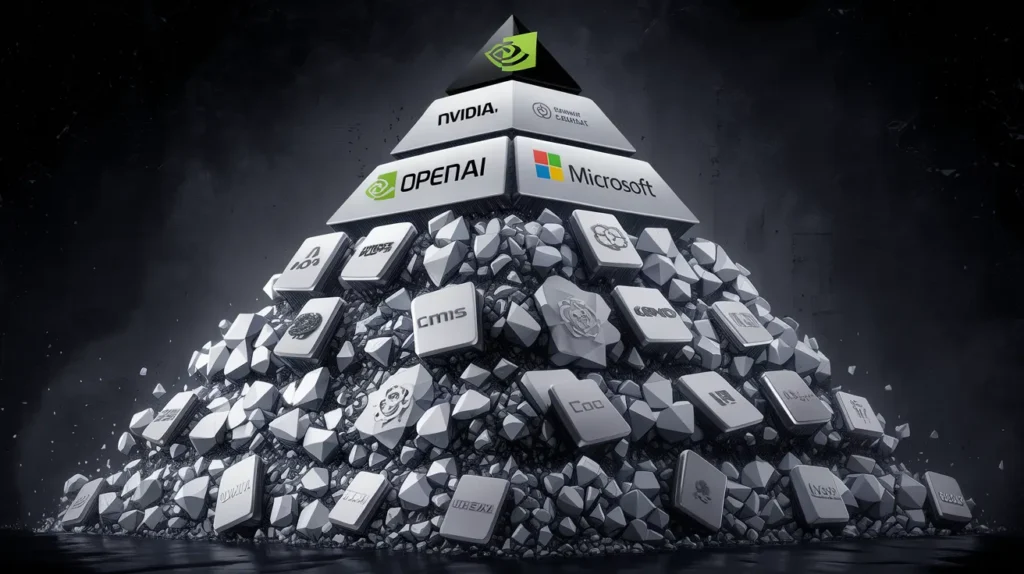
What’s dying are companies without defensible advantages — those built entirely on APIs from giants like OpenAI, Anthropic, or Google.
If your product relies 100% on someone else’s model, your “AI company” is basically a thin layer of UI over someone else’s innovation. The moment big players integrate similar features, your startup becomes irrelevant.
In other words: the AI market isn’t collapsing — it’s consolidating.
Why So Many AI Startups Will Be Dead
- Commoditization of AI Models
What once felt exclusive is now accessible to everyone. You can build an AI chatbot in minutes using open APIs. That kills differentiation. - Unsustainable Burn Rates
Training and hosting models cost a fortune. Startups relying on venture capital are running out of cash as interest rates rise. - Overhyped Marketing, Underwhelming Results
Many AI tools promise “revolutionary automation” but deliver basic autocomplete with fancy branding. Users notice. - Big Tech Integration
As Microsoft, Google, and Adobe embed AI features directly into their ecosystems, stand-alone tools lose value overnight. - Lack of Moats
Successful startups like Perplexity AI or Runway ML survive because they have proprietary data, unique models, or strong branding — not because they use ChatGPT’s API.
AI Startups Will Be Dead — Compared to Traditional Tech Companies
In the early 2000s, web startups flourished — until the dot-com bubble burst. The survivors weren’t the loudest; they were the ones solving real problems.
AI startups are no different. Traditional tech companies like Amazon, Meta, and Apple built moats — logistics, data, ecosystems.
In contrast, many AI startups today are built on fragile foundations: prompt engineering and subscription models with no long-term stickiness.
The difference? Traditional companies owned their infrastructure. AI startups rent it — from OpenAI, Hugging Face, or Google Cloud.
Examples of Surviving AI Startups
Not all hope is lost. Some AI startups are building lasting value:
- Anthropic focuses on safe, transparent AI — carving a unique niche.
- Runway ML revolutionizes video editing with proprietary generative models.
- Hugging Face became the “GitHub of AI” by fostering community and openness.
- Stability AI (behind Stable Diffusion) leveraged open-source innovation to stay relevant.
These companies understand one rule: own your data, your model, or your distribution — ideally, all three.
How to Build an AI Startup That Survives
If you’re a founder, here’s how to avoid becoming part of the AI graveyard:
- Build a moat: Use proprietary datasets, not just public APIs.
- Focus on verticals: Solve problems in one niche — legal, healthcare, education — deeply.
- Offer workflow integration: Don’t just add AI; make it indispensable to users’ daily tasks.
- Monetize sustainably: Avoid relying solely on subscriptions; explore enterprise models or data partnerships.
- Be transparent: The market is fatigued with hype. Show clear, measurable impact.
If you’re investing, follow the same logic — look for founders who blend AI innovation with business realism.
The Future of AI Innovation
Yes, AI startups will be dead, but AI itself will be everywhere — embedded into tools, systems, and services we already use.
The future belongs to those who integrate AI quietly but effectively, not those shouting “we’re AI-powered!” in every headline.
So the question isn’t whether AI startups will die — that’s already happening. The real question is: who will rise from the ashes to build the next wave of enduring AI companies?