10 Timeless Books That Every AI Engineer Should Read to Master the Future of Intelligence
Hook: When Code Alone Isn’t Enough
Every AI engineer hits that moment — when tutorials and GitHub repos no longer cut it.
The deeper you dive, the more you realize: AI isn’t just about coding models; it’s about understanding intelligence itself.
That’s where books come in. They’re the ultimate mentors — condensing decades of breakthroughs, failures, and frameworks into a few hundred pages.
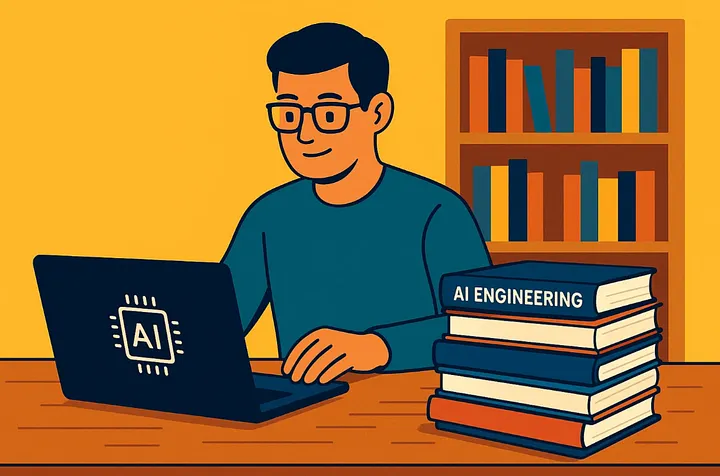
In this guide, we’ll explore the Books That Every AI Engineer Should Read — from classics that shaped machine learning to modern insights that prepare you for the coming wave of AGI.
Why Books Still Matter in the Age of AI
In a world where ChatGPT, Claude, and DeepSeek can summarize anything, why bother reading whole books?
Because books teach depth, context, and connection — qualities that models alone can’t give you.
They help you understand why algorithms work, not just how. They refine your judgment, ethics, and sense of curiosity — all essential for building safe, creative AI systems.
Think of it this way: tutorials teach you to swim; books teach you to navigate oceans.
Top 10 Books That Every AI Engineer Should Read
1. “Artificial Intelligence: A Modern Approach” by Stuart Russell & Peter Norvig
If AI had a Bible, this would be it.
This classic covers everything — from search algorithms to probabilistic reasoning to ethics. It’s the best theoretical grounding for anyone serious about understanding AI as a science, not just a tool.
2. “Deep Learning” by Ian Goodfellow, Yoshua Bengio, and Aaron Courville
This book is the definitive deep learning textbook. It unpacks neural networks, optimization, and generative models in a mathematically rich but approachable way.
Even if you use frameworks like PyTorch or TensorFlow, understanding these foundations transforms how you design architectures.
3. “The Hundred-Page Machine Learning Book” by Andriy Burkov
Perfect for busy engineers.
It compresses the essentials of machine learning — from linear regression to deep learning — into one digestible, well-structured read.
If you’re new to ML or need a fast refresher, start here.
4. “Hands-On Machine Learning with Scikit-Learn, Keras, and TensorFlow” by Aurélien Géron
Think of this as your practical playbook.
It bridges theory and implementation beautifully — full of real-world projects, clear explanations, and step-by-step coding tutorials.
5. “The Master Algorithm” by Pedro Domingos
A fascinating read that explores the idea that all machine learning algorithms might be special cases of one “master algorithm.”
It’s written for thinkers — those who want to see the philosophical and scientific unification behind AI.
6. “Superintelligence: Paths, Dangers, Strategies” by Nick Bostrom
Every AI engineer needs to grapple with this one.
It dives into the ethical and existential questions around AGI — what happens when machines surpass human intelligence?
It’s not about code; it’s about consequences.
7. “You Look Like a Thing and I Love You” by Janelle Shane
A lighthearted yet profound look at how AI actually behaves in the wild.
Through hilarious experiments, Shane reveals how easily AI systems misinterpret human intent. It’s the perfect mix of humor and insight for engineers who need a reality check.
8. “Human Compatible” by Stuart Russell
Russell argues that AI’s true challenge isn’t intelligence — it’s alignment.
This book reframes how we design AI systems that truly benefit humanity. Essential for anyone building AI products that touch real lives.
9. “Life 3.0” by Max Tegmark
A visionary exploration of AI’s impact on society, jobs, and evolution.
Tegmark paints possible futures — some utopian, others chilling — and challenges engineers to think about which one they’re building toward.
10. “Grokking Deep Learning” by Andrew Trask
This is the most beginner-friendly introduction to neural networks.
It explains how and why they work using vivid analogies and minimal jargon. A perfect first step for developers coming from non-ML backgrounds.
Why These Books Stand Out
Unlike scattered tutorials or blog posts, these books offer structured depth — teaching you to think critically, debug intuitively, and design AI that scales.
They bridge the gap between intuition and implementation, giving you both the mindset and skillset of a true AI engineer.
Traditional learning focuses on tools.
Reading these books builds wisdom — the ability to choose the right tool for the right problem.
Practical Tips for Reading as an AI Engineer
- Mix theory with practice — Alternate between reading and coding projects.
- Take notes and build mini-projects — Apply one new concept after each chapter.
- Join reading groups or AI communities — Discuss insights, challenge ideas, grow together.
- Use AI assistants for summaries — Tools like Claude or ChatGPT can help review complex sections, but don’t skip deep reading.
(Explore AI engineer communities →)
Conclusion: Reading Is Still the Ultimate Upgrade
The Books That Every AI Engineer Should Read aren’t just about algorithms — they’re about expanding your intellectual toolkit and moral compass.
They teach you to see beyond models and metrics, into the why behind AI.
So the real question is:
👉 As AI learns from us, are we still learning deeply enough from it?