Using AI to Make Smarter Business Choices: The New Blueprint for Growth
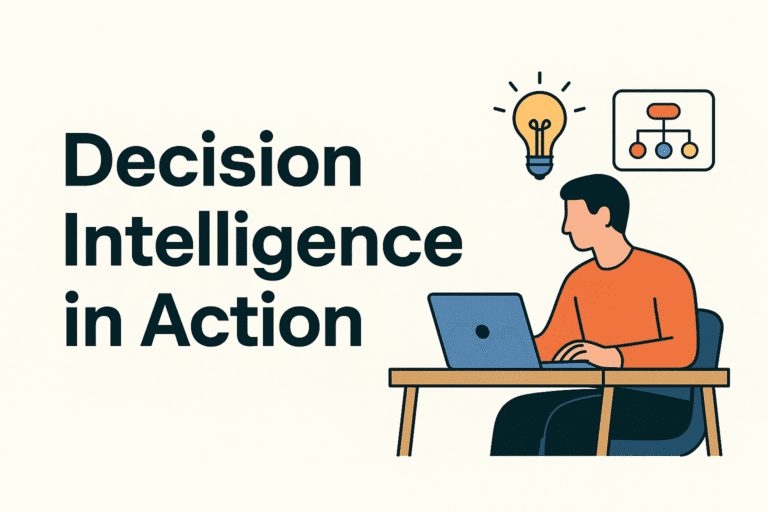
Every business leader has faced that moment — staring at dashboards, guessing which product to launch, or wondering what customers really want. The difference today? Those who embrace AI no longer have to guess.
In 2025, Using AI to Make Smarter Business Choices isn’t a futuristic concept — it’s a competitive necessity. From startups to global enterprises, AI is helping decision-makers act faster, reduce risk, and discover insights humans alone might miss.
Let’s dive into how this shift is transforming the way organizations think, plan, and grow.
Why Using AI to Make Smarter Business Choices Matters
In the traditional business world, decisions were based on intuition, experience, or incomplete data. While gut instincts can work sometimes, they often fail in complex, data-heavy markets.
Enter Artificial Intelligence (AI) — capable of analyzing millions of data points, recognizing hidden patterns, and predicting future outcomes in real time. Businesses that adopt AI-driven decision-making report up to 30% higher efficiency and 20% faster growth, according to McKinsey & Company.
In short, AI replaces assumption with precision.
The Core of Smarter Decision-Making: Data + Intelligence
At the heart of Using AI to Make Smarter Business Choices lies data — lots of it.
AI tools process structured and unstructured data from sources like sales, marketing, customer feedback, and even social media sentiment. By doing so, they turn overwhelming information into actionable intelligence.
Think of it like having a 24/7 business advisor who never sleeps and learns continuously.
Traditional Decision-Making vs. AI-Powered Insights
| Aspect | Traditional Method | AI-Driven Method |
| Data Volume | Limited datasets | Massive real-time data |
| Speed | Reactive | Predictive |
| Accuracy | Depends on human bias | Based on pattern recognition |
| Adaptability | Slow to change | Self-learning & scalable |
Traditional methods rely heavily on past experience and small samples. In contrast, AI uses live data to make predictions and recommendations, often before human teams even detect a trend.
That’s why AI isn’t replacing human decision-makers — it’s enhancing them.
Real-World Examples of AI in Business Decisions
- Amazon uses AI to optimize inventory, pricing, and product recommendations — increasing revenue and customer satisfaction.
- Coca-Cola analyzes social media and sales data to identify emerging flavor trends before launching new products.
- Netflix leverages AI-driven algorithms to predict viewer preferences, saving millions in content investments.
These companies aren’t guessing anymore. They’re using predictive analytics and machine learning to make every business move smarter.
Practical Ways to Start Using AI to Make Smarter Business Choices
If you’re not a Fortune 500 company, don’t worry — AI tools are more accessible than ever.
Here’s how you can start:
1. Adopt AI Analytics Platforms
Use platforms like Google Cloud AI, IBM Watson, or Microsoft Azure AI to gather insights from your data.
2. Automate Routine Decisions
Automate tasks like inventory restocking, lead scoring, or content personalization to free your team for strategic thinking.
3. Leverage Predictive Modeling
Predict future demand, customer churn, or sales performance using AI forecasting tools like DataRobot or H2O.ai.
4. Use AI for Customer Insights
AI sentiment analysis tools help you understand what your customers feel, not just what they say.
5. Combine AI with Human Expertise
AI provides data-backed insights; humans add context, creativity, and empathy. Together, they make unstoppable decision engines.
The Benefits of AI-Enhanced Decision-Making
✅ Faster Decisions: AI processes data in seconds.
✅ Reduced Bias: Decisions are based on facts, not feelings.
✅ Increased Profitability: Targeted actions minimize waste and boost ROI.
✅ Future Readiness: Businesses can adapt proactively to market changes.
When businesses use AI correctly, they don’t just make better choices — they make them faster, cheaper, and with greater confidence.
Common Mistakes to Avoid
While Using AI to Make Smarter Business Choices can be transformative, pitfalls exist:
- Relying entirely on AI without human oversight
- Using poor-quality or biased data
- Ignoring ethical considerations like transparency and privacy
AI works best when paired with human judgment, clear goals, and responsible governance.
The Future of Business Decision-Making
In the next five years, decision-making will move from being descriptive (“what happened”) to prescriptive (“what should we do next”).
Businesses that embrace AI now will lead markets, while those that resist will drown in data overload.
It’s not about replacing human intelligence — it’s about augmenting it with artificial intelligence.
Final Thoughts
Every click, every purchase, and every trend leaves a trail of data. AI helps you connect those dots faster and smarter than ever before.
So here’s the question:
Will your next business decision be based on intuition — or intelligence?