What I Learnt About AI Agent: 7 Lessons That Changed How I See Artificial Intelligence

When I first started exploring AI tools, I thought “AI Agents” were just another tech buzzword — something futuristic that only big companies could use. But after experimenting with them for months, I realized how AI Agents quietly reshape productivity, decision-making, and even creativity.
This post breaks down what I learnt about AI Agent, how they differ from traditional automation, and why they might redefine the way we work forever.
Understanding What I Learnt About AI Agent
At its core, an AI Agent is a system designed to perform tasks, make decisions, and improve itself based on data and goals. Unlike simple automation tools that follow rules, AI Agents think in context.
They can analyze your emails, summarize conversations, generate insights, and even take actions like scheduling meetings or updating databases. In essence, they bridge the gap between human intent and digital execution — adapting dynamically instead of following static scripts.
That’s the first big thing I learnt about AI Agent — they evolve, just like humans do.
Lesson 1: AI Agents Think Beyond Automation
Traditional automation runs on “if-this-then-that.” AI Agents operate on understanding. For instance, while a Zapier automation can send an email when a form is filled, an AI Agent can analyze responses, prioritize leads, and personalize the follow-up.
This means businesses no longer just automate tasks — they delegate thinking.
Lesson 2: Collaboration Between Humans and AI is the Real Power
One of the most surprising things I learnt about AI Agent is how collaboration works best when humans stay in the loop. AI doesn’t replace intuition; it enhances it.
When I used an AI Agent to manage my content calendar, it didn’t just schedule posts — it suggested optimal publishing times and detected patterns in audience engagement. That’s intelligence layered with human creativity.
Lesson 3: AI Agents Learn From Mistakes
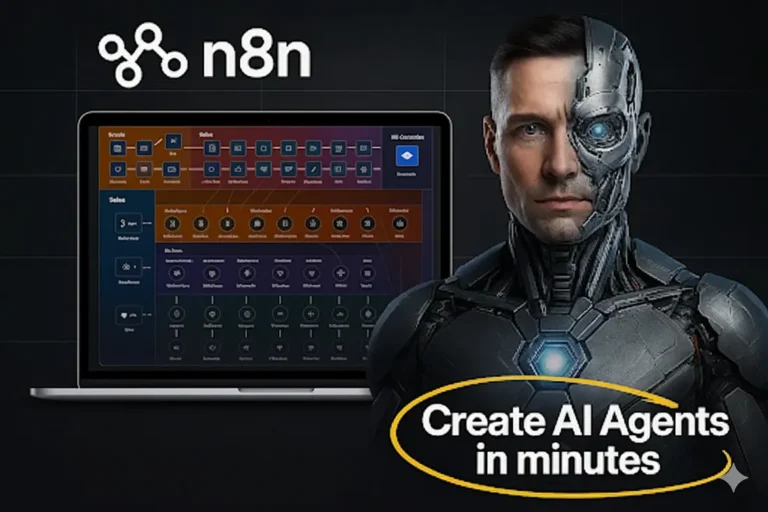
Unlike static bots, AI Agents improve over time. Tools like n8n AI Agents, LangChain, or AutoGPT adapt based on outcomes. When an action doesn’t go as planned, they adjust their future responses — like a digital colleague learning from feedback.
That’s when it clicked — AI Agents aren’t about replacing humans, they’re about scaling human efficiency.
Lesson 4: Why AI Agents Beat Traditional Tools
Traditional systems require rigid workflows and manual supervision. AI Agents, on the other hand, dynamically adjust based on real-time data.
For example:
- A customer service agent that resolves 80% of inquiries autonomously.
- A marketing AI agent that crafts personalized campaigns.
- A research assistant that summarizes thousands of academic papers.
Once you experience that kind of adaptability, traditional tools start to feel outdated.
Lesson 5: Real-World Use Cases That Blew My Mind
Here are some scenarios that showed me the full potential of AI Agents:
- Freelancers: Automating outreach, client onboarding, and invoicing.
- Startups: Managing social media, emails, and internal reporting seamlessly.
- Healthcare: AI Agents assisting doctors with patient summaries and diagnosis suggestions.
- Education: Personalized tutoring that adapts to each student’s learning speed.
Every industry finds a unique way to leverage these “digital coworkers.”
Lesson 6: The Challenges I Discovered
Of course, what I learnt about AI Agent isn’t all rosy. The learning curve can be steep, especially for integration and customization. Data privacy and control are major concerns too.
But the more I explored, the more I realized — these challenges aren’t roadblocks; they’re design opportunities. Ethical, transparent AI will be the defining mark of the next generation of intelligent systems.
Lesson 7: The Future Is Autonomous — But Human-Guided
The future won’t be “AI vs humans.” It will be AI with humans — augmenting our abilities, not replacing them.
That’s the biggest insight from what I learnt about AI Agent — they make us more human by handling the mechanical parts of our work.
Final Thought
AI Agents aren’t magic; they’re mirrors — reflecting how intelligently we use them. As they evolve into everyday companions, one question remains:
Will we train AI to serve our goals, or will AI teach us to redefine what productivity really means?